It’s a question that comes up almost every time I run a conference, a training session, or a coaching call with a tourism client. Several studies have tried to answer it over the years, but none strikes me as rigorous as the one produced by Scott Graffius. His first pass at the topic dates back to 2018, and he recently released an update built on 37 different data sources. The result is a clear picture of the average lifespan of a post across the following platforms:
- Snapchat
- X (formerly Twitter)
- YouTube
- Blog
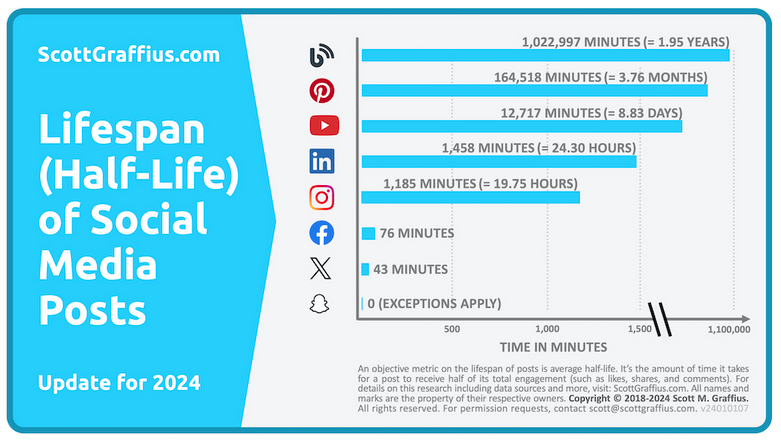
Depending on how your property or destination uses these channels, the conclusions you draw will differ. TikTok’s absence from the study is a real shame, but even without it, a few findings stand out for anyone marketing a hotel, an inn, a ski resort, or a destination.
A quick methodological note: what’s being measured here is “half-life,” meaning the time it takes for a post to reach at least 50% of the total engagement it will ever generate. In plain terms, it’s the average time before a post hits half its lifetime total of likes, comments, shares, and saves.
The blog, king of long-haul content
With a lifespan approaching two years, a blog post remains, hands down, the best investment for anyone thinking beyond the next booking window. It’s the backbone of a digital content strategy for any tourism business, feeding SEO and giving social media something worth sharing long after the fact.
I saw this again recently while reviewing a client’s website performance for the year. Of the top five most-visited articles, only two had been published that same year; the other three dated back two or three seasons. Relevance beats frequency, always, and nowhere is that truer than for a destination or a property trying to rank for “best time to visit” or “things to do near” queries.
Pinterest, the surprising runner-up
Pinterest may not draw the same buzz as other platforms in this ranking, but it’s worth noting that pins live for close to four months on average. For inns, boutique hotels, and destinations selling a strong visual identity, that’s a gift. I’ve worked with several hospitality clients for whom Pinterest quietly became one of the top traffic sources to their website, boards full of gastronomic getaways and mountain views doing slow, steady work long after the season ended. A platform that looks marginal on paper but earns its keep.
Snapchat and X, the frivolity of a passing thought
Posts on messaging-style apps like TikTok or Snapchat are famously short-lived, and it’s even more pronounced on micro-blogging platforms like X, Threads, or Bluesky. Snapchat content lives less than a minute on average, and a post on X survives about 46 minutes. Between us, even that figure feels generous, but let’s move on.
For a resort or a festival live-tweeting an event, that’s fine; the content is meant to be of the moment. But it’s a reminder not to lean on these channels for anything you want travellers to actually find later.
Instagram, more durable than Facebook
Here’s the finding that matters most for hospitality marketers, given how many hotels, inns, and destinations run both Facebook and Instagram, often simultaneously. Facebook’s post lifespan has shrunk steadily over the years. Back in 2013 or 2014, the average sat at two to three hours. Today it’s barely over an hour, 76 minutes to be precise. Instagram, on the other hand, holds engagement for nearly a full day, close to 20 hours.
The practical takeaway for a property posting room shots, seasonal packages, or a chef’s new tasting menu: be careful not to cannibalize your own reach by stacking multiple Instagram posts on your best day. Facebook, by contrast, can absorb a higher posting frequency, provided you actually have something worth sharing.








Leave a Reply